
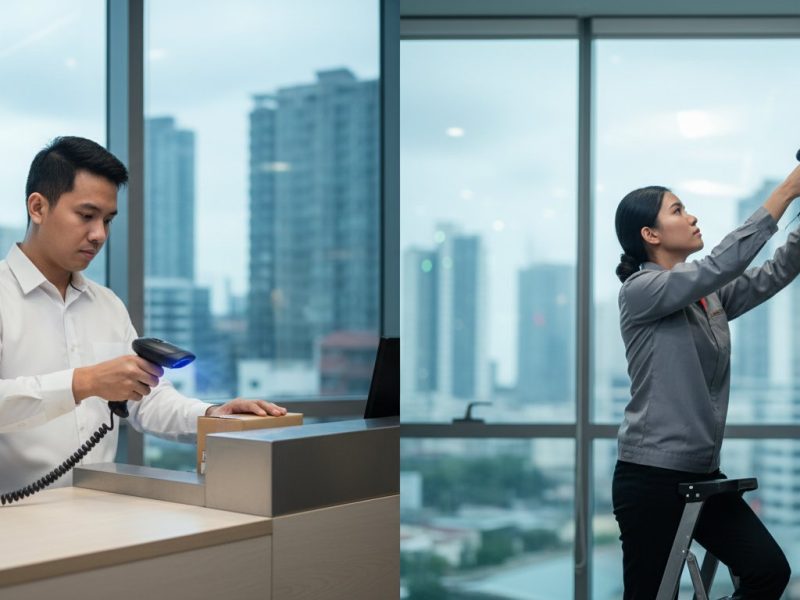
In the fast-paced landscape of Philippine business, selecting the right handheld barcode scanner is a critical decision that directly impacts operational efficiency. The central question often becomes a choice between mobility and steadfast reliability: is the higher initial investment for a cordless model, potentially costing thousands of pesos more, justified by its freedom of movement? Or does the consistent, tethered connection of a corded scanner offer a more robust and cost-effective solution for your specific workflow?
Concerns over battery life, connectivity issues, and the risk of a restrictive cord creating bottlenecks are all valid considerations that can overwhelm any operations manager. This guide is designed to provide clarity. We will directly compare corded and cordless scanners, breaking down their performance metrics, total cost of ownership, and ideal applications within the local market. By the end, you will be equipped to make an informed, strategic choice that enhances productivity and aligns perfectly with your business objectives, ensuring you partner with a provider that understands your identification and data capture needs.
Key Takeaways
- Determine whether cost-effectiveness or operational mobility is the primary driver for your business to select the right scanning solution.
- Identify specific applications, such as retail point-of-sale, where the stability and lower initial cost of a corded scanner provide the most value.
- Learn how a cordless handheld barcode scanner can enhance productivity and safety in environments requiring high mobility, like inventory management.
- Compare models across key performance metrics-including range, battery life, and total cost of ownership-to make a data-driven investment for your operations.
The Core Decision: Understanding Corded vs. Cordless Handheld Scanners
Selecting the right data capture tool is a critical first step in optimizing any business workflow, from retail point-of-sale to warehouse inventory management. At the heart of this process is the handheld barcode scanner, a device designed for rapid, accurate, and seamless information gathering. This essential tool functions as a bridge between physical products and digital systems, translating printed barcodes into actionable data. While the underlying technology of a barcode reader has evolved significantly, the primary decision for businesses today often comes down to a fundamental choice: corded or cordless?
The traditional corded scanner remains a reliable workhorse in many static applications, while modern cordless scanners offer unparalleled mobility and flexibility. There is no single “best” option; the ideal choice depends entirely on your specific operational environment, workflow demands, and infrastructure. Understanding the core differences is key to making a cost-effective and performance-driven investment.
What is a Corded Handheld Scanner?
A corded scanner establishes a direct physical link to a PC, POS terminal, or other host device through a cable, typically USB or RS232. This single cable serves a dual purpose: it provides constant power to the scanner and transmits captured data instantly. Known for their plug-and-play simplicity and exceptionally stable connection, corded models eliminate concerns about battery life or signal interference. Their primary limitation, however, is inherent in their design-operator movement is restricted by the length of the cord.
What is a Cordless Handheld Scanner?
A cordless handheld barcode scanner operates untethered, connecting wirelessly to a base station or host device using technologies like Bluetooth or radio frequency (RF). This freedom is powered by a rechargeable battery, allowing operators to move freely around a stockroom, warehouse floor, or large retail space. By removing the physical tether, these scanners enhance operator efficiency and safety, enabling data capture on bulky items or in hard-to-reach locations within a specified wireless range.
The Case for Corded Scanners: Reliability and Cost-Effectiveness
In an era of increasing mobility, the tethered handheld barcode scanner remains a cornerstone of efficient data capture for many Philippine businesses. Its enduring relevance is rooted in two fundamental principles: unwavering reliability and superior cost-effectiveness. For operations where stability is non-negotiable and budgets are carefully managed, a corded solution is often the most strategic and pragmatic choice, delivering consistent performance without the complexities of wireless technology.
Unmatched Reliability and Simplicity
The primary advantage of a corded scanner is its direct, uninterrupted connection to a power source and host system. This straightforward design eliminates common operational pain points associated with wireless devices, ensuring consistent performance and maximizing uptime. The “always-on” nature of a tethered device translates directly into operational stability.
- No Battery Management: Devices are powered directly via the host cable, eliminating the need to charge, manage, or replace batteries mid-shift and preventing costly workflow interruptions.
- Zero Wireless Interference: The physical connection is immune to signal drop-offs from Wi-Fi, Bluetooth, or other radio frequency (RF) interference common in busy industrial or retail environments.
- Plug-and-Play Deployment: Most corded scanners offer a simple plug-and-play setup via USB, connecting instantly to Point-of-Sale (POS) systems and computers without complex pairing procedures.
- Fewer Points of Failure: With no batteries, charging contacts, or radios to manage, there are fewer components that can fail, leading to a more robust and dependable device lifecycle.
Lower Initial Investment and Total Cost of Ownership (TCO)
From a procurement standpoint, corded scanners present a clear financial advantage. The upfront investment per unit is significantly lower, often costing thousands of pesos less than comparable cordless models. This initial savings is compounded over the device’s lifespan, resulting in a lower Total Cost of Ownership (TCO). Businesses avoid the recurring expenses of purchasing and managing spare batteries and face reduced maintenance complexity, making it a highly economical solution for large-scale deployments.
Ideal Applications for Corded Scanners
The optimal handheld barcode scanner is one that perfectly aligns with its designated workflow. Corded models excel in static, high-volume environments where the device remains at a fixed workstation. In these scenarios, the primary goal is to leverage the core business benefits of barcodes-such as enhanced accuracy and immediate data entry-without the added complexity and cost of mobility. Key applications include:
- Retail POS Counters: For processing customer checkouts where the scanner never leaves the cashier’s station.
- Document Processing & Administration: In office settings for tracking paperwork, archiving files, and managing assets.
- Manufacturing Assembly Lines: For tracking components and sub-assemblies at fixed quality control or production points.
- Admissions and Check-In Desks: At libraries, clinics, laboratories, or events where staff are stationary.
The Cordless Advantage: Boosting Mobility and Productivity
Transitioning from a corded to a cordless handheld barcode scanner is a strategic operational upgrade that delivers an immediate and measurable impact. By removing the physical tether to a workstation, businesses unlock significant gains in efficiency, safety, and employee productivity. This freedom of movement directly translates into a compelling return on investment (ROI), measured in accelerated workflows and optimized labor allocation, which in the Philippine market means direct savings in operational costs.
Unleashing Operator Freedom and Efficiency
A cordless scanner empowers your team to bring the data capture process to the item, rather than the other way around. This fundamental shift eliminates inefficient movement and streamlines core tasks across various industries. The operational benefits are clear:
- Scan Bulky Items In-Place: Effortlessly scan palletized goods, heavy equipment, or oversized inventory without the logistical challenge of moving them to a fixed station.
- Enhance Workplace Safety: Reduce trip hazards and cable clutter in busy environments like warehouses and manufacturing floors, creating a safer, more organized workspace.
- Accelerate Inventory Counts: Enable staff to move freely down aisles in stockrooms and warehouses, dramatically increasing the speed and accuracy of cycle counts.
- Improve Point-of-Care Service: In healthcare, cordless scanners allow for precise bedside scanning of patient wristbands and medications, enhancing patient safety and care efficiency.
Key Considerations: Battery and Connectivity
Modern cordless scanners are engineered for demanding enterprise environments, addressing historical concerns about reliability. High-capacity lithium-ion batteries are standard, typically providing enough power to last a full 8- to 12-hour shift on a single charge. The scanner’s cradle serves a dual purpose: it provides a secure charging dock and acts as the communication base station, transmitting scanned data to your host system. Understanding the fundamentals of barcode technology helps in appreciating how this data is seamlessly captured and relayed. Connectivity options are tailored to specific needs:
- Bluetooth Models: Ideal for shorter-range applications (typically up to 10 meters), perfect for retail point-of-sale or workstation-centric tasks.
- Radio Frequency (RF) Models: Offer a much longer range (often up to 100 meters), providing robust connectivity across large warehouse floors or stockrooms.
- Batch Mode: A crucial feature where the handheld barcode scanner stores scans in its internal memory when out of range, automatically uploading the data once reconnected to the base.
When Cordless Is the Clear Winner
While corded scanners have their place, a cordless model is the definitive solution for any workflow where mobility is a key performance driver. Consider a cordless scanner essential for:
- Warehouse & Logistics: For inventory management, order picking, and high-volume package tracking in receiving and shipping.
- Large-Format Retail: For in-aisle price checks, inventory lookups, and mobile point-of-sale (POS) to reduce queue times.
- Field Service & Delivery: For on-site asset tracking, parts management, and proof-of-delivery confirmation.
Head-to-Head Comparison: A Decision Framework
Selecting the optimal handheld barcode scanner requires a clear evaluation of your specific operational demands. This framework moves beyond simple features to analyze the business impact of each choice, enabling you to make a strategic investment that aligns with your workflow, budget, and long-term goals. Use the following direct comparison to weigh which factors are most critical for your business.
| Decision Factor | Corded Scanners | Cordless Scanners |
|---|---|---|
| Mobility & Range | Tethered to host (1.5-3m cable) | Freedom to roam (up to 100m) |
| Total Cost | Lower initial investment | Higher TCO (device + battery) |
| Reliability | Simpler; cable is main failure point | Adds battery & signal management |
| Ergonomics | Cable can cause drag and fatigue | Superior; no cable restrictions |
Factor 1: Mobility and Range
A corded scanner tethers the operator to the host computer, typically limited by a 1.5 to 3-meter cable. This is highly effective for static applications like point-of-sale counters. In contrast, a cordless model offers significant freedom, with Bluetooth ranges often extending up to 100 meters from the base. Decision Point: If operators must scan items on warehouse shelves, in a stockroom, or on a large retail floor, the mobility of a cordless scanner is non-negotiable.
Factor 2: Cost (Initial vs. Total)
Corded scanners present a lower initial purchase price, often ranging from ₱3,000 to ₱7,000 for robust models. Cordless scanners carry a higher initial cost, typically starting from ₱8,000, due to the battery, charging cradle, and wireless technology. You must also factor in the potential long-term cost of battery replacements. Decision Point: Does the anticipated productivity gain from untethered scanning justify the higher total cost of ownership for your operation?
Factor 3: Reliability and Maintenance
With a simple plug-and-play design, corded scanners are exceptionally reliable; the most common failure point is physical damage to the cable. Cordless models are also highly robust but introduce battery management into the workflow. Operations must account for charging cycles to avoid downtime. Decision Point: Is eliminating battery management a top priority for operational simplicity, or is your environment electronically “noisy” with potential for RF interference?
Factor 4: Performance and Ergonomics
In terms of pure scanning capability, both types offer comparable high-performance engines for 1D and 2D barcodes. The key differentiator is ergonomics. A cordless handheld barcode scanner eliminates cable drag, reducing operator fatigue and improving safety. This enhanced comfort directly translates to sustained productivity. The final choice often comes down to how these physical factors impact your team. Consult our experts to analyze your specific workflow and identify the most efficient solution.
Choosing the Right Partner for Your Scanning Needs in the Philippines
Selecting between corded and cordless scanners is a critical decision, but it is only the first step. To truly optimize your operations, the partner you choose to procure and support your hardware is just as important as the technology itself. Investing in a handheld barcode scanner is an investment in your business’s efficiency, and the right supplier ensures that investment delivers maximum, long-term value.
Why Local Expertise Matters
Partnering with a Philippines-based provider like All ID offers distinct advantages that international online retailers cannot match. When your operations depend on reliable data capture, localized support becomes non-negotiable. The benefits are clear and immediate:
- Accessible Technical Support: Get prompt, on-the-ground assistance and repair services without the delays and complexities of international shipping and communication.
- Local Market Understanding: We understand the unique logistical, operational, and economic challenges faced by businesses in the Philippines, allowing us to recommend truly effective solutions.
- Faster Fulfillment: With readily available local stock, we can significantly reduce lead times, getting critical hardware into your hands when you need it.
Beyond the Hardware: A Solutions-Oriented Approach
All ID is not merely a vendor; we are a Total Solution Provider for Identification and Data Capture. Our role extends far beyond the initial sale. We focus on providing a comprehensive solution that integrates seamlessly into your existing infrastructure. Our team consults with you to ensure the hardware you select-whether it’s a robust device from a leading brand like Zebra or another specialized tool-is the perfect fit for your specific application.
We help you integrate your new handheld barcode scanner with your core systems, such as your Point of Sale (POS) or Warehouse Management System (WMS), to create a truly cohesive and efficient workflow. This consultative approach prevents costly mismatches and ensures your technology drives tangible results from day one.
To ensure your investment is sound and your operations are optimized, consult with our experts. Let us help you build a robust data capture solution tailored for success in the Philippine market.
Empower Your Operations with the Right Scanning Solution
The decision between a corded and a cordless scanner ultimately hinges on your unique operational demands. Corded models offer unmatched reliability and cost-efficiency for stationary tasks, while cordless scanners provide the freedom and mobility essential for optimizing inventory management, retail point-of-sale, and warehouse logistics. Choosing the ideal handheld barcode scanner is not just a hardware purchase; it’s a strategic investment in your company’s productivity and accuracy.
As a total solution provider in the Philippines, All ID Asia Philippines Inc. is here to guide you. We are an authorized distributor of Zebra and other leading global brands, ensuring you receive robust and high-performance equipment. Our comprehensive offerings extend beyond hardware to include software, supplies, and the dedicated support of our Philippine-based technical team, equipping your business for seamless integration and sustained success.
Ready to enhance your data capture capabilities? Explore our range of corded and cordless scanners today. Let’s work together to find the perfect fit for your business goals.
Frequently Asked Questions
How far can a wireless barcode scanner transmit data?
The transmission range of a wireless barcode scanner is determined by its Bluetooth technology. Standard models offer a reliable connection up to 10 meters (approximately 33 feet) from the base station. For larger operational areas, such as warehouses or expansive retail floors, long-range industrial models are available that can extend this distance to 100 meters (330 feet). Physical obstructions like concrete walls or metal shelving can impact signal strength, so an on-site assessment is recommended for optimal performance.
What is the typical battery life of a cordless barcode scanner?
A cordless barcode scanner’s battery is engineered for demanding work environments, typically lasting a full 8 to 14-hour shift on a single charge. Performance is often measured in total scans, with many high-capacity models delivering over 50,000 scans before needing to be recharged. This robust battery performance ensures uninterrupted workflow and maximizes employee productivity, preventing costly downtime for your inventory management or point-of-sale operations throughout the business day.
Are handheld barcode scanners difficult to set up?
Modern handheld barcode scanners are designed for straightforward, plug-and-play implementation. Most corded models connect via a USB cable and require no special software, functioning immediately with your existing POS or inventory system. Cordless models involve a simple, one-time pairing process with their base or directly to a host device via Bluetooth. This ease of setup ensures minimal operational disruption, allowing your team to quickly integrate new hardware and enhance your data capture capabilities.
Can a handheld scanner read barcodes from a phone screen?
Yes, but this capability depends on the scanner’s technology. A 2D imager-based scanner can reliably read barcodes from digital screens, such as smartphones and tablets. In contrast, standard 1D laser scanners often struggle with reflective surfaces and cannot read from screens. For businesses utilizing digital coupons, mobile loyalty programs, or e-tickets, investing in a 2D handheld barcode scanner is essential for providing a seamless and modern customer experience at the point of sale.
What is the difference between a 1D and a 2D barcode scanner?
A 1D scanner reads linear barcodes, like the UPC codes on retail products, using a single laser line and must be oriented correctly. In contrast, a 2D scanner uses imaging technology, like a camera, to capture an entire image. This allows it to read complex 2D codes like QR codes and Data Matrix, which hold more information. Crucially, 2D scanners also offer omnidirectional scanning of both 1D and 2D codes, improving speed and user efficiency.
Which scanner is best for a small retail store in the Philippines?
For a small retail store in the Philippines, a cost-effective corded 2D imager is an excellent choice for the point-of-sale (POS) counter. It handles traditional barcodes and is future-proof for reading QR codes from popular e-wallets and digital coupons from phones. For inventory tasks, a durable entry-level cordless scanner provides the mobility needed to scan items on shelves. The optimal solution depends on your specific workflow and budget. Consult with our experts to identify the most efficient scanner for your business.
